
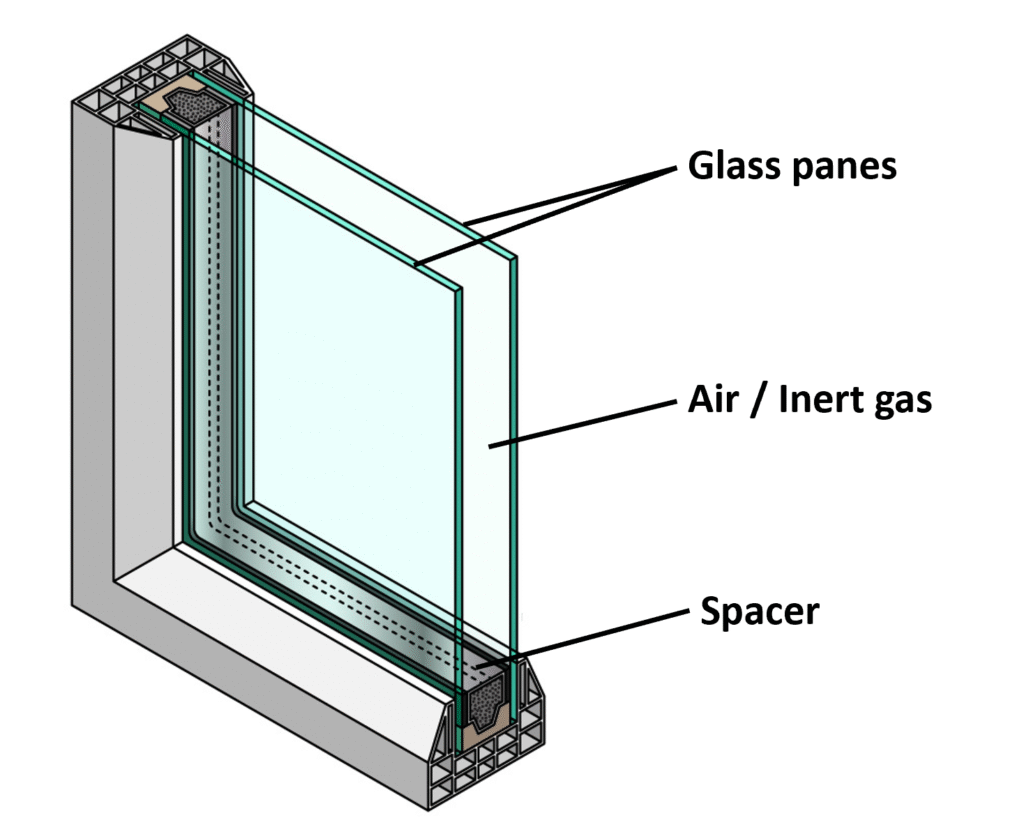
Double glazing refers to a type of window made with two panes of glass separated by a spacer and a sealed cavity filled with either air or an inert gas like argon. This cavity acts as an insulating layer, significantly reducing the transfer of heat and cold between the interior and exterior environments.
How it Works:
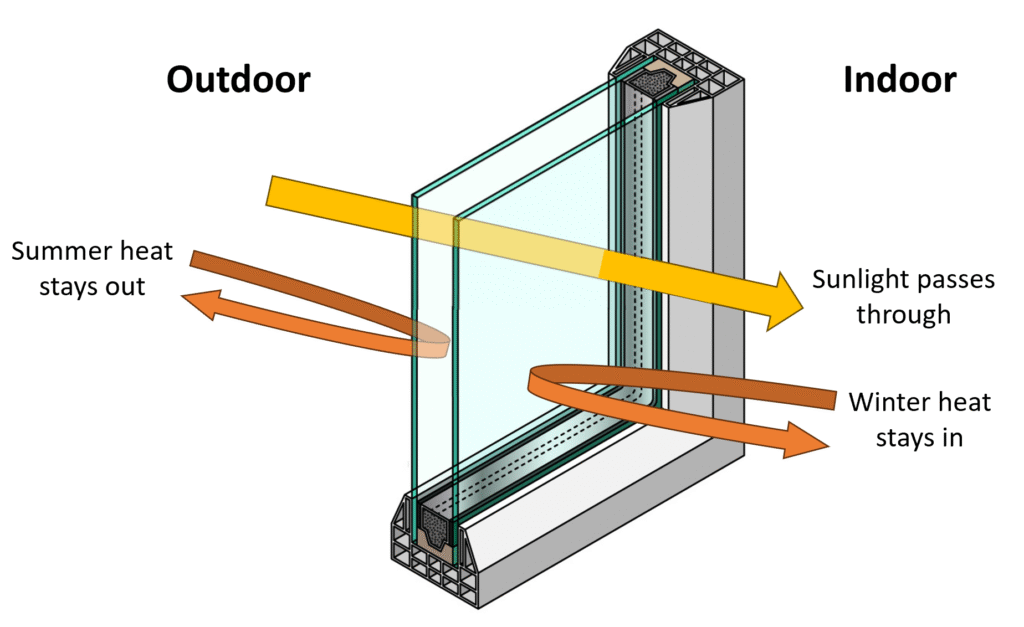
The insulating gap slows down thermal conduction, helping to keep warm air inside during winter and block heat from entering during summer. It also reduces the formation of condensation and improves sound insulation by dampening vibrations through the window structure.
Why It Matters:
This design greatly improves energy efficiency, lowering the need for heating and cooling. It’s already widely used in the world and is becoming the new standard for modern, high-performance buildings.
Comfort all year
Double glazing turns your windows into silent helpers for a more comfortable home.
By reducing the transfer of heat through your windows – with up to 67% less energy lost – it helps keep your home naturally cooler in summer and warmer in winter, no matter the weather outside.
This means less need for air conditioning or heaters, helping you stay comfortable while cutting your energy use and bills, especially useful when electricity availability isn’t always guaranteed.
Electricity price in Cape Town ZAR/kW.h
No Data Found
Long-term savings
Double glazing isn’t just about comfort, it’s also a smart financial decision for your home.
While the initial investment might be slightly higher than traditional windows, the long-term savings are well worth it. With reduced energy consumption, your home will cost less to maintain year-round, paying for itself over time with a return on investment in just a few years
Energy prices have been rising steadily, with electricity rates more than doubling in the past 10 years. As these rates continue to climb, the savings from energy-efficient solutions like double glazing will become even more substantial.
Invest in the future
Double glazing also adds lasting value to your property. Energy-efficient homes are becoming a standard, not a luxury. Installing double-glazed windows is a smart way to future-proof your home, increasing its resale value, market appeal, and compliance with evolving building regulations.
In many parts of the world, double glazing is already a legal requirement in new builds and major renovations, and South Africa is following the same path. With energy efficiency regulations tightening rapidly, homes without proper insulation may soon be penalized or devalued.
Make a strategic investment, stay ahead of regulations, increase your home’s value, and build a smarter future.


Enhanced security
Double-glazed windows provide more than insulation, they also strengthen your home’s security. Featuring two panes of glass separated by a sealed gap, they are significantly harder to break than standard single-pane windows. This added durability acts as a physical barrier that deters intruders and improves peace of mind.
Many double-glazed systems also support reinforced frames and multi-point locking mechanisms, further enhancing protection. It’s a smart way to combine comfort with safety without compromising on style or visibility.
Quieter living spaces
Your home should be your quiet retreat, and double glazing helps ensure that.
The dual-pane construction creates a buffer zone that significantly reduces outside noise (about 35dB), whether it’s from traffic, neighbors, or urban activity. This makes your living environment more peaceful and improves sleep quality, focus, and general well-being. Especially in busy or growing areas, the difference is immediately noticeable.
Enjoy a more tranquil home without sealing yourself off from natural light or views.


Environmentat benefits
Double glazing is not just a benefit for your wallet, it’s a step towards a greener, more sustainable future.
By reducing the need for heating and cooling, double-glazed windows lower the demand for energy from non-renewable sources. This means a reduction in your carbon footprint, helping you do your part in the global fight against climate change.
It’s a simple upgrade that goes a long way in improving both your immediate surroundings and the planet.
- City: Cape Town, with its mix of cool winters and warm, sunny days
- Home: Around 80 m², featuring 22 m² of window area
- Family: Aiming for a consistent indoor temperature of 21 °C all year round
- Energy use: Electric heaters in winter and air conditioner in summer
- Electricity costs: Based on current local tariffs and their recent increases